You find a used car you like. The photos look good, the price is fair and the seller seems nice. Then a friend says, “Run a VIN check first.” You search online and see many sites. Some websites offer free checks, while others charge a fee. What matters most is not the price, but which vehicle records the service searches.
So which one do you need? This guide explains free vs paid VIN check Australia in plain words. You’ll see what each type shows, what it misses, and where your money is best spent before you buy.
What a VIN Check Does?
A VIN is a code made up of 17 characters. Each car has its own unique 17-character VIN, much like a fingerprint. It can be located at the base of the windscreen, on the compliance plate or on the registration papers.
Entering the VIN into a checking service does one of two things. The tool may decode the number and show the make, model and year. Or it may search records linked to the car, such as finance, theft and write-off records. These are very different jobs, and many websites blur them together. That is why so many buyers get confused about free VIN check vs paid reports.
Free VIN Check Options in Australia
In Australia, a free VIN check typically displays make, model, year and some specifications. This makes it easier to catch a seller advertising a top-spec model when the car is actually a base model.
A free VIN lookup is mostly a decoder. It tells you what the number says. It does not tell you what has happened to the car.
You can also do a free rego check with your state or territory authority. It usually shows if the registration is current and confirms some car details. It’s handy for spotting expired rego or a wrong description. It won’t tell you if the car has money owing on it.
Use these tools as a first filter. They help you rule cars out. They can’t tell you a car is safe to buy.
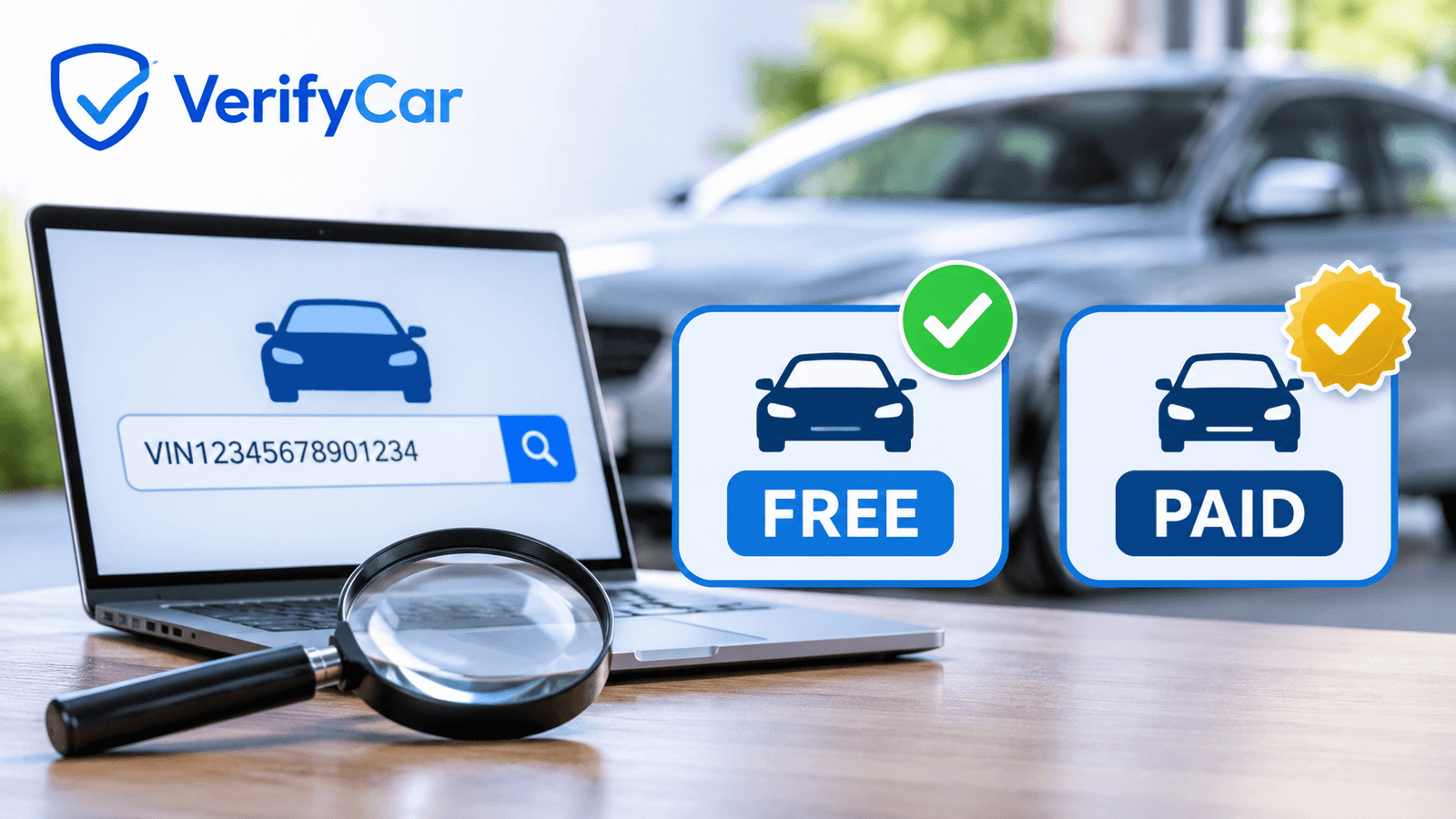
Free vs Paid VIN Check: The Main Differences
The difference is which records get searched. It has nothing to do with how nice the report looks.
| Feature | Free VIN Check | Paid VIN Check |
| Basic vehicle details | Often available | Usually available |
| Vehicle specifications | May be available | Usually available |
| Registration information | Available through free state services | May be included |
| Finance owing | Not guaranteed | Available if a PPSR search is included |
| Written-off history | Not guaranteed | Available if the right records are checked |
| Stolen status | Depends on the service | May be included |
| Official PPSR certificate | Not usually included | Included if an official PPSR search is done |
| Mechanical condition | Not checked | Not checked by a history report alone |
A paid vs free car history report comparison is not as simple as “paid is better”. Some paid reports are thin and use the same data as free tools. Some free tools do exactly what they promise. Before you pay, read what the report searches and whether it includes an official PPSR certificate.
How Reliable Free Reports Are
For the one thing they check, they are usually fine. If a free vehicle history report says the car is a 2018 model with a certain engine, that’s probably right.
The trouble starts when people think a free report covers more than it does. A clean result from a decoder does not mean the car has a clean history. It only means the tool found nothing, because it never looked. Always check where the data comes from and what the service says it covers.
When a Free Check Is Enough
It depends on where you are in the buying process. Is a free VIN check enough when you’re browsing and want to confirm the specs? Yes. Is it enough when you’re about to send thousands of dollars to a stranger? No. At that point you need to know about finance, write-offs and theft, and a basic lookup can’t show these reliably.
Finance Owing and Free Checks
This worries buyers the most, and for good reason. If a car has finance owing and the lender has a recorded interest, that debt can become your problem after you buy.
Some free tools give a hint, but don’t count on it. The safe way is an official PPSR search, which looks for recorded security interests against the car. If one shows up, talk to the seller and the finance company before you go on.
Write-Off History and Free Checks
Some providers show write-off information, but only if they include it. Don’t assume it. An official PPSR search can show a recorded write-off, so that’s the safer choice.
There’s one limit to know about. A search only shows what was recorded. A car that had a hard knock and a cheap repair may never appear in any database. This is why a physical inspection matters, and we cover that further down.
The PPSR and Its Cost
The Personal Property Securities Register (PPSR) is the Australian Government’s register of security interests. The official search is not free, but it’s very cheap.
The PPSR check cost on the official government site is $2 for an online vehicle search. A search through the contact centre costs $7. In both cases, the search certificate is included at no extra charge.
You may also see a free PPSR check on private websites. Most of these are a quick preview, not a full official search. Read the fine print so you know you’re getting a real search and not a teaser that leads to an upsell.
Private providers often charge more because they add extra history data or use their own report format. That can be handy, but you’re paying for the extras, not for a better PPSR result. If you only need an official search, the $2 option does the job. You’ll need the VIN or chassis number, so check every digit twice.
Getting an Official PPSR Certificate
A basic free VIN lookup usually does not come with an official certificate. You get one when a real PPSR search is completed. You can do this on the government site or through a private provider that runs the official search.
If you want proof of what was searched and when, ask if the certificate is included before you pay.
When a Paid VIN Check Is Worth the Money
Is a VIN check worth paying for? In most cases, yes, if you’re serious about the car. For $2, an official PPSR search is hard to beat. A higher-priced report makes sense when it gives you extra checked information you’d otherwise have to chase yourself.
It makes no sense to pay a lot for a report that does little more than a free decoder. Read what’s inside before you pay. A higher price does not always mean better data, and no report can catch everything.
Know the history and the condition. A VerifyCar PPSR check ($9.95) shows money owing, write-offs and stolen records. A CarAssure inspection shows what shape the car is in today.
See VerifyCar pricing → | Book an inspection →
Smart Steps Before You Pay a Seller
A few simple habits can save you a lot of trouble. First, match the VIN on the car to the VIN on the paperwork. Look at the compliance plate and the registration papers. If the numbers don’t match, walk away.
Second, run your search close to the day you buy. Finance can be added or a status can change at any time, so an old report may be out of date.
Third, ask the seller direct questions. Ask if there is any finance on the car, if it has ever been in a major accident and why they’re selling. A seller with nothing to hide will answer easily.
Common Mistakes Buyers Make
Many buyers make the same few mistakes. Some trust the report the seller hands them. It’s safer to run your own check, because you can’t be sure the seller’s report is current or even real. Others pay for several reports from different sites and get the same basic data each time. One official search plus an inspection is usually better value than three similar reports.
And some buyers skip the checks because the car looks clean and the seller seems honest. A good-looking car can still have hidden problems. A few dollars and a little time now can save you thousands later.
Why a VIN Check Is Not the Whole Story
Here’s the catch with every history report, free or paid. It tells you what’s on record. It doesn’t tell you how the car is today. Worn brakes, a tired gearbox, hidden rust, a poor repair and electrical faults won’t show up in a database.
That’s where an independent pre-purchase inspection helps. A good one covers the engine, transmission, brakes, suspension, tyres, bodywork, electronics and underbody. It also includes a road test and a diagnostic scan where supported.
At VerifyCar, our independent pre-purchase car inspections show you the real condition of a car before you commit. Our Standard and Premium packages also include a PPSR certificate through our sub brand VerifyCar, so the paperwork check and the physical check happen together.
Conclusion
Free tools are good for quick screening. They confirm the basics and help you drop cars that don’t match their listing. But they can miss finance, write-offs and theft, which are the things that cost buyers the most. An official PPSR search covers those for just $2, and a paid report is worth it only when it adds real, checked information.
Even a clean history report can’t tell you if the car is mechanically sound. The best plan is simple: screen with free tools, run an official PPSR search, then have the car inspected by someone who isn’t selling it.
Want fewer surprises? Book a pre-purchase inspection with CarAssure and get both the history (through our Sister brand VerifyCar) and the condition checked before you pay.
FAQs
Is there a free VIN check in Australia?
There are free VIN lookup and free car rego checks by state and territory authorities available that display basic car information. The results will vary with the service and a simple search will not necessarily reveal the complete record.
Does a free VIN check work?
It can be dependable for the items that it verifies, like make, model and year. Some providers offer certain services and others don’t, so be sure to find out where the data is from. Use an official PPSR search for finance and write-off records.
What’s the difference between a free and a paid VIN check?
A free check usually gives basic car details. A paid report may add more history records. The exact difference depends on the provider and whether the paid report includes an official PPSR search.
Is a PPSR check free?
The official online PPSR vehicle search costs $2. The search certificate is included at no extra charge.
How much does a PPSR check cost?
The official online search costs $2. A search through the contact centre costs $7. Private providers may charge more for bundled services.